
Why Price Never Reaches Your Take‑Profit
A familiar situation: you enter a trade, price moves your way, and with just a little left to your take‑profit it suddenly stalls, reverses and heads back. It feels as if the market can "see" your exact order. In reality it has nothing to do with bad luck or someone hunting you personally. The reason is far simpler and more logical — and once you understand it, you will start setting your targets in a completely different way.
It is not bad luck — it is where you place your target
Most beginners set their take‑profit on a "nice" number — a round or multiple figure: 64,000, 65,000, +1,000 from entry. It is convenient and easy to read, but the market has no reason to respect those exact levels. Price follows different reference points.
The key idea: after a level breaks, the next real target for price is not a round number but the nearest large options "wall." That is where price most often stalls and reverses. If your take‑profit sits beyond that wall, price simply will not reach it — it stops earlier.
What is an "options wall"
Besides plain buying and selling of coins, the market trades options — contracts that grant the right to buy or sell an asset at a pre‑agreed price (called the strike). At certain strikes a very large number of these contracts pile up. That cluster is the "wall."
Why does a wall slow price down? The large participants who sold those options (the market makers) do not want price to run far past the cluster — that is costly for them. So as price approaches the wall they start to defend it: selling into the approach and buying the dips. From the outside it looks as if price "hits a ceiling" and turns around. A large player defends the level — and the market really does stop right there.
A real example
The screenshot below is the BTC options profile on the CryptoMetrics Pro dashboard. Spot price at that moment is roughly $62,946. The tallest bar (the arrow points to it) sits at $63,500 — that is the nearest large wall above. Another important reference is the Flip Point at $63,075, the line above which market behaviour changes.
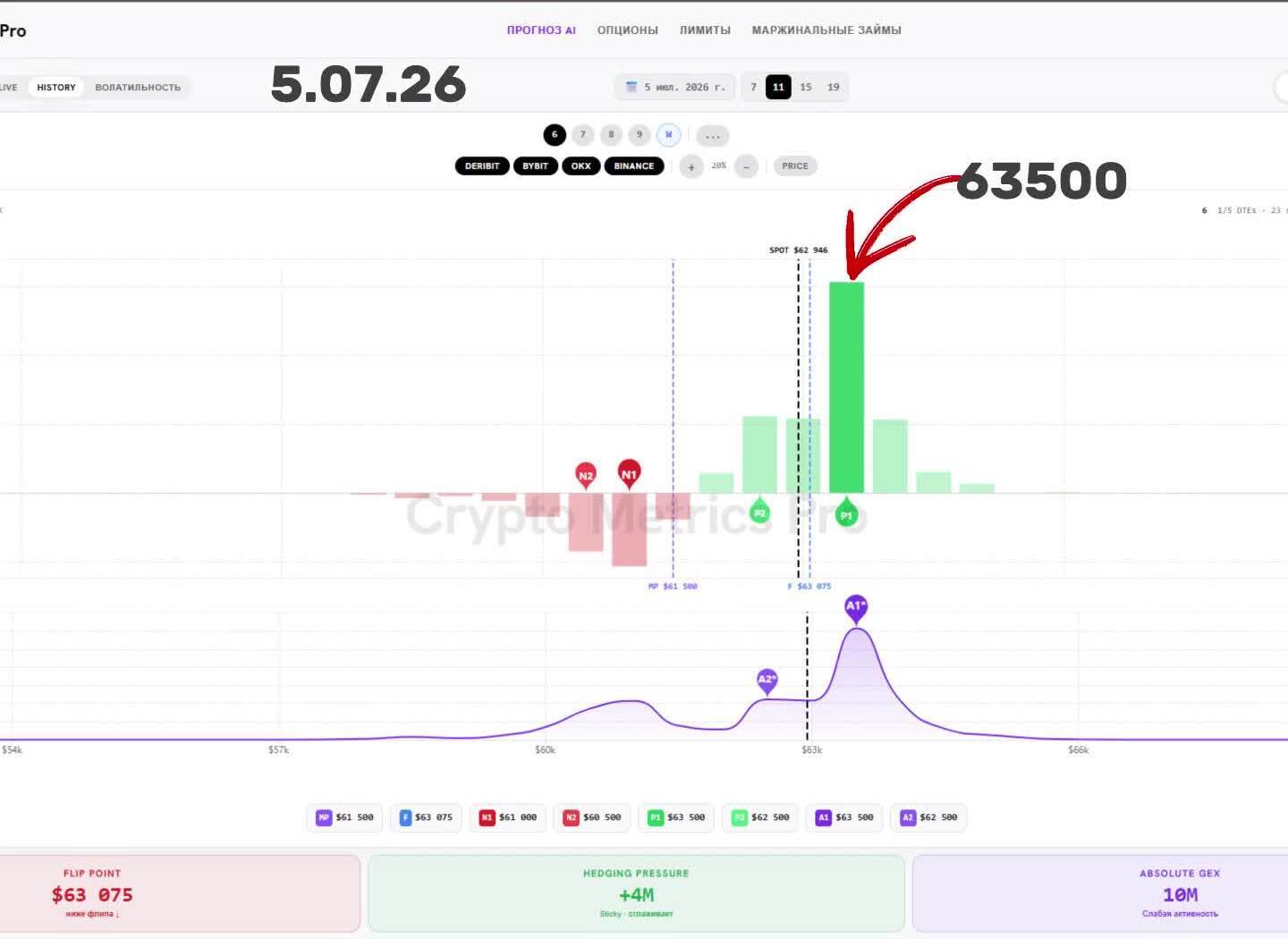
CryptoMetrics Pro options profile: the largest wall at $63,500 (arrow) and the Flip Point at $63,075.
What does this mean in practice? If you are long, setting take‑profit at $64,000 "because it is round" is risky — the $63,500 wall stands in the way. The logical target is just short of the wall, while price is still moving freely. That way you take profit where the market actually stops, not where you wish it would.
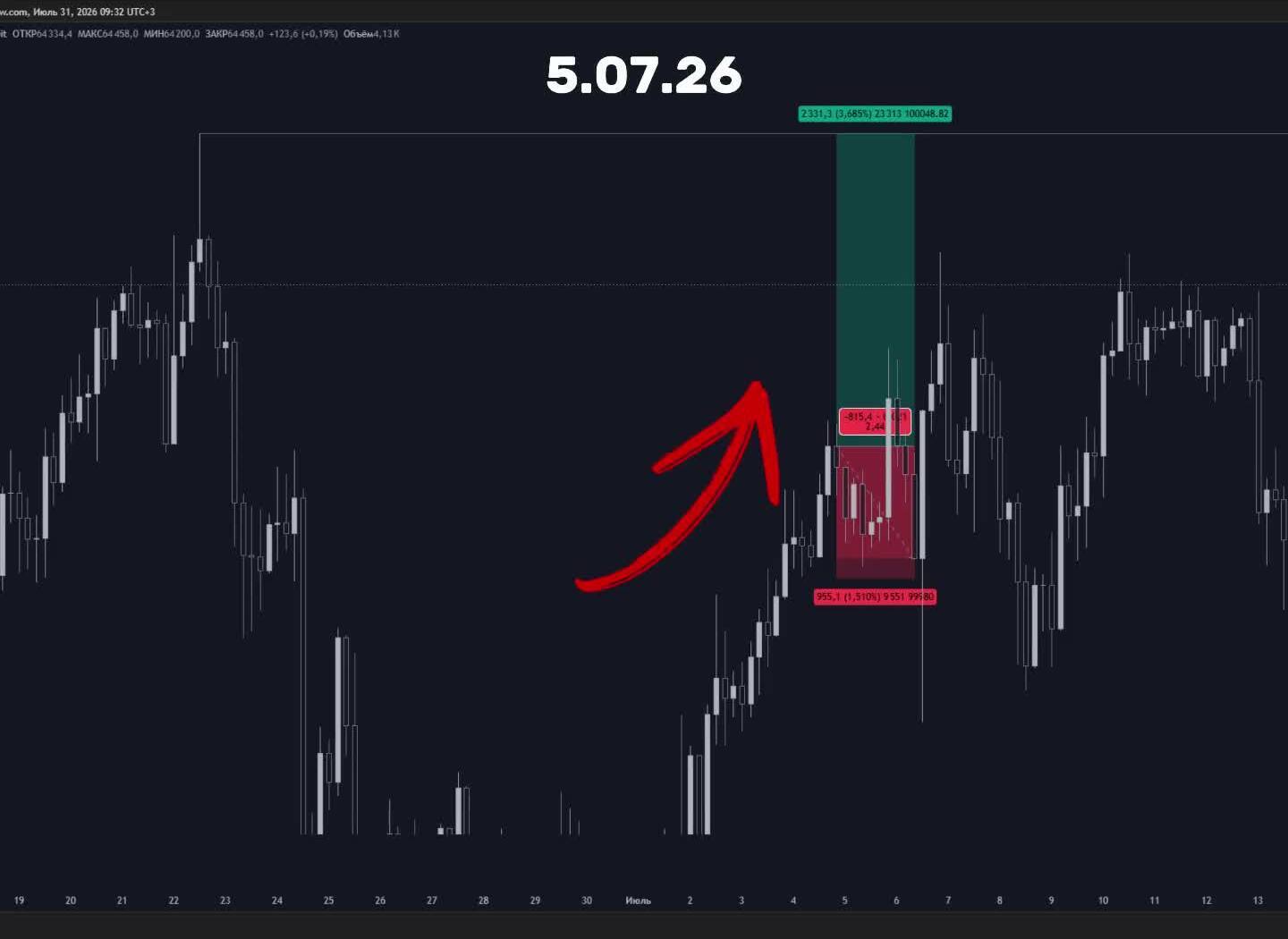
On the price chart you can see the move run into the resistance zone and reverse before reaching the far target.
Where to find these levels
All the reference points live on the CryptoMetrics Pro dashboard. As a beginner you only need to understand four readings:
- Options walls (profile bars). The tallest bars are the levels where price stalls most often. Mark the largest one as your nearest target / resistance.
- Flip Point. The line above which the market tends to "accelerate" and below which it tends to "fade." Helps you read the character of the move.
- Max Pain. The price the market is "incentivised" to drift toward by options expiry. It often acts like a magnet.
- Hedging Pressure. Shows whether large players are smoothing the move out or, on the contrary, accelerating it.
You do not need to memorise it all at once. Start with a single question before every entry: "Where is the nearest wall in the direction of my trade?" — and set your take‑profit before it, not beyond it.
Checklist before you set a take‑profit
- I am not placing my target just on a round or multiple number.
- I opened the dashboard and found the nearest large options wall in the trade direction.
- I checked the Flip Point and Max Pain — where the market is being pulled.
- I placed the take‑profit with a margin BEFORE the wall, not beyond it.
- I understand: if the target is beyond the wall, price most likely will not reach it.
In short
Price reverses not because of bad luck but because there is an options wall ahead, defended by large players. Set your take‑profit before the nearest wall — and you will bank profit where the market really stops. To see where those walls sit on Bitcoin right now, check the CryptoMetrics Pro dashboard.
See BTC and ETH levels live in the Options · GEX module.
Open moduleMore guides
This material is educational and is not individual investment advice. Trading cryptocurrencies and derivatives carries a high level of risk.