
Why Bitcoin Falls When No One Is Selling
It happens: Bitcoin collapses sharply even though there was no big wave of selling — no one really sold. It looks like price "fell out of nowhere." There is a reason, though; it just is not in the sales but in the order book: liquidity disappeared before the drop. Let us break down why this happens and how to spot it in advance.
The answer is not in sales but in the order book
The large player keeps buy orders (BID) in the book while it is profitable for them. But before important events they pull them — and the book empties. Price can still be standing still: since no one is actively selling, there seems to be nothing to make it drop. But the support below price is already gone.
An empty book is crashed by an ordinary sale
And now an ordinary, run-of-the-mill sale is enough. Earlier the orders in the book would have absorbed it calmly — price would not even flinch. But there are no orders left, nothing to catch the sale, and price flies down. The key point: the move was caused not by this sale but by what happened earlier — liquidity disappeared. The sale is only the trigger.
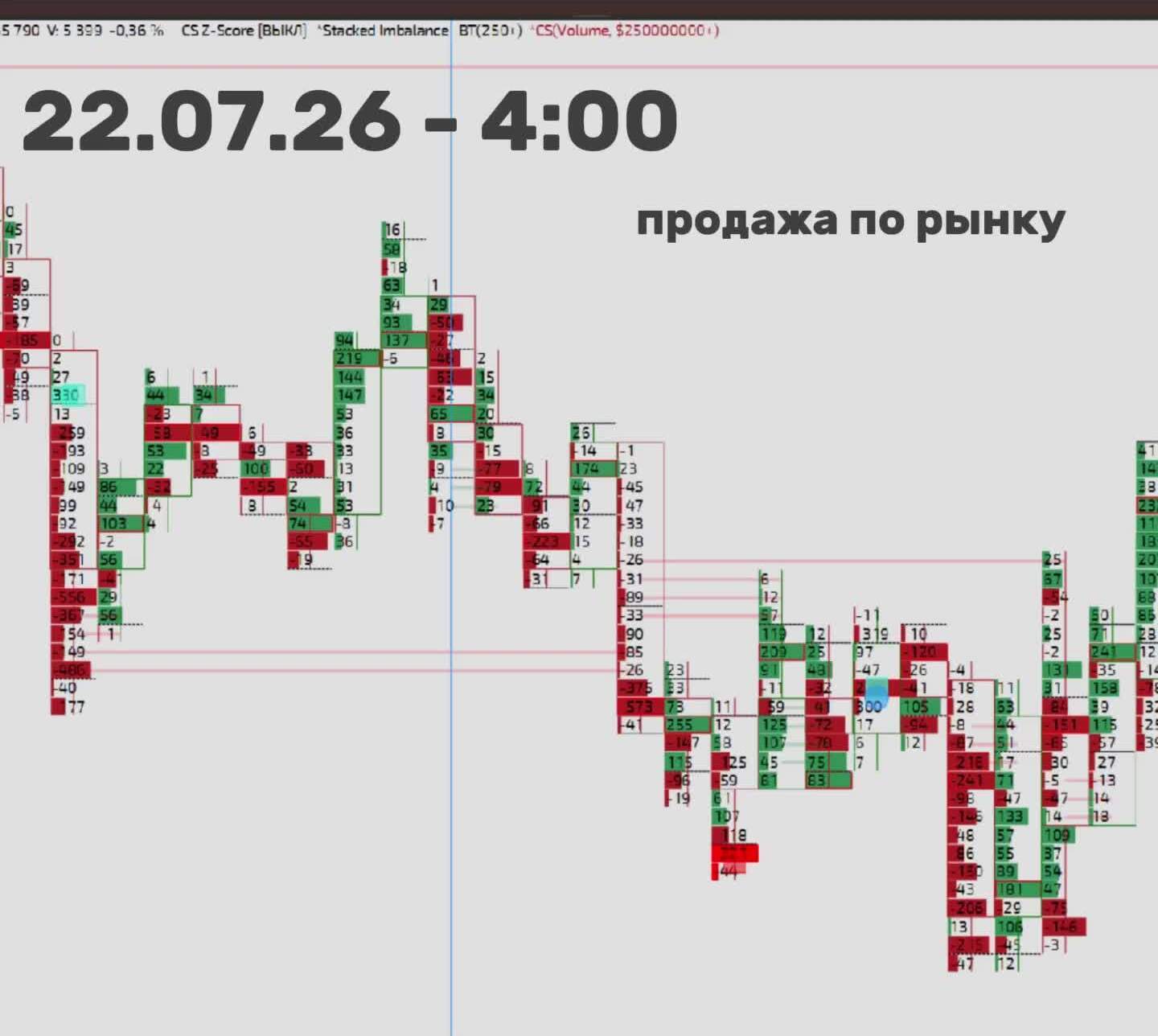
An ordinary market sale into an empty book: there is nothing to absorb it, and price drops sharply.
It can be seen in advance
The good news: vanishing liquidity is visible before the drop — in the order-book history. In the screenshot you can see the buy-order volume (green BID line) drop sharply right at the highs, before the crash: at 22.07 04:00 the Bid is only $3.3K versus its usual values. That is an early signal: support is leaving, and any push down is now dangerous.
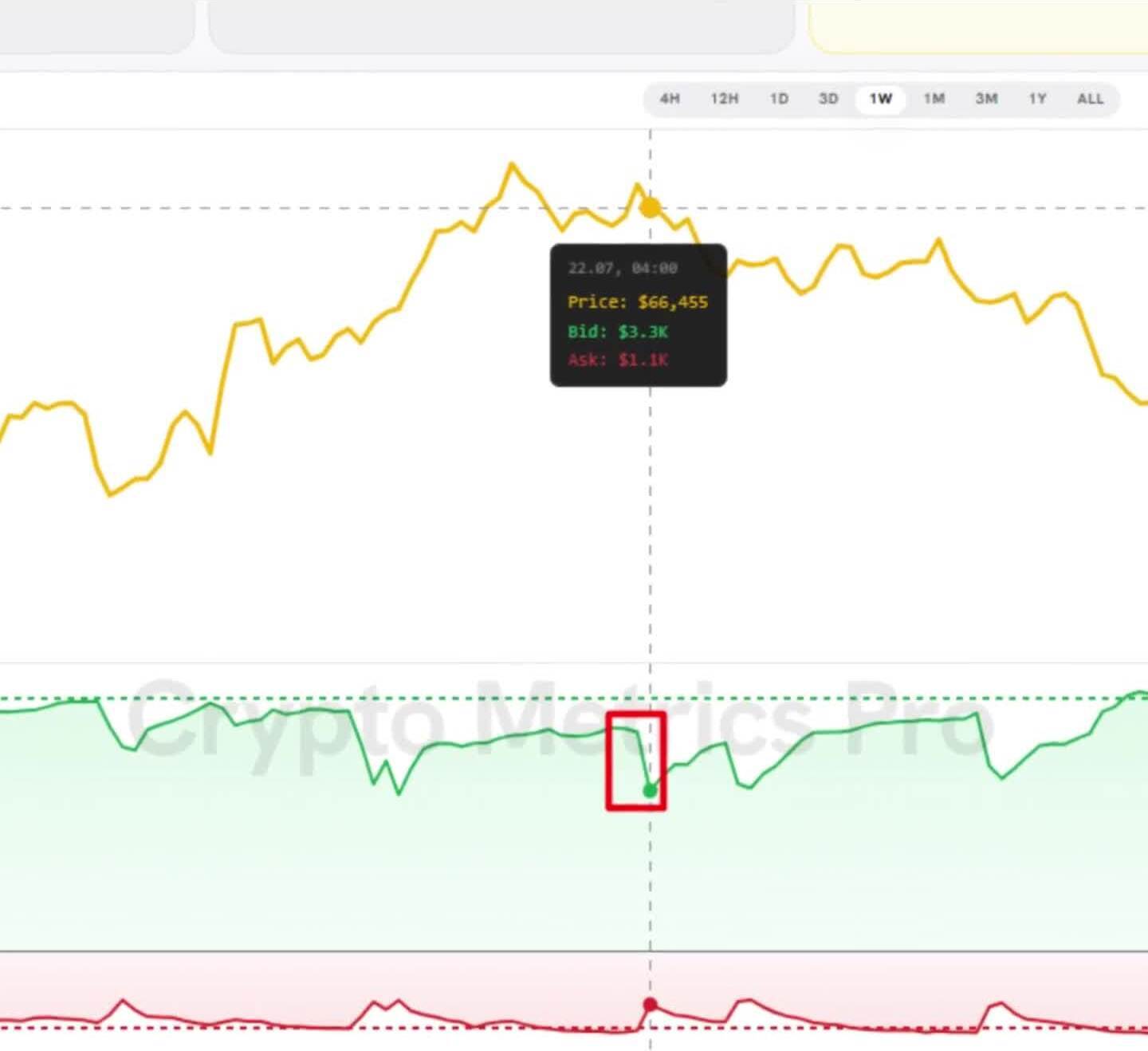
Order-book history: buy orders (BID) dropped sharply at the highs before the fall — liquidity left in advance.
What a beginner should watch
To avoid getting caught in such crashes, a beginner only needs a few references on the Limit Order Depth page:
- BID (buy orders). A sharp drop in the green line — buyers are leaving from below price.
- Bid/Ask Imbalance and Depth Change. A skew toward selling and a fast drop in depth — fertile ground for a crash.
- "Thin near spot". A warning about thin liquidity right by price.
- Important events. Before news and expiry the book often empties — be more careful.
Checklist: do not get caught by an empty book
- I watch not only the candles but also the order-book history (Limit Order Depth).
- I track BID: whether buy orders dropped at the highs.
- I check the "thin near spot" warning and Depth Change.
- Before important events I expect the book may empty.
- I remember: a crash is caused not by a sale but by liquidity that vanished earlier.
In short
Bitcoin falls "when no one is selling" because liquidity disappeared in advance: the large player pulled the buy orders before important events, and the book emptied. After that, an ordinary run-of-the-mill sale is enough — there is nothing to absorb it, and price flies down. The cause is not the sale but what happened earlier. And it can be seen in advance in the order-book history. To see how liquidity is behaving on Bitcoin right now, check the Limit Order Depth page in CryptoMetrics Pro.
See BTC and ETH levels live in the Order Book module.
Open moduleMore guides
This material is educational and is not individual investment advice. Trading cryptocurrencies and derivatives carries a high level of risk.