
Where to Enter Bitcoin Without Getting Stopped Out
A familiar pain: you enter a trade, set a stop — price jerks, takes out your stop, and then goes your way without you. The problem is usually not the stop but the entry point: if you enter at random, the stop ends up in a random place and is easy to "sweep." The fix is to enter at a strong level and only on volume confirmation. The video shows a simple three-step method that removes random entries.
Why you get stopped out
A stop gets taken out not because "the market is against you" but because the entry was in a weak spot. If you enter mid-move or under a strong level hoping for a breakout, the stop ends up where price is easy to shake. To avoid this, tie the entry to a real level and hide the stop behind it — behind a wall the large player defends. Then, to stop you out, the market first has to break through that wall.
The three-step method
The whole approach fits into three simple steps:
- 1. Levels from the site (after expiry). Take ready-made options levels from the GEX Terminal on CryptoMetrics Pro. Refresh them after expiry — the balance of power changes.
- 2. Transfer to the footprint (and set alerts). Move these levels onto a footprint chart (volume analysis) and set alerts so you do not miss price approaching.
- 3. Enter on confirmation (no volume = no trade). Enter only when real volume/reaction shows at the level. No volume confirmation — no trade.
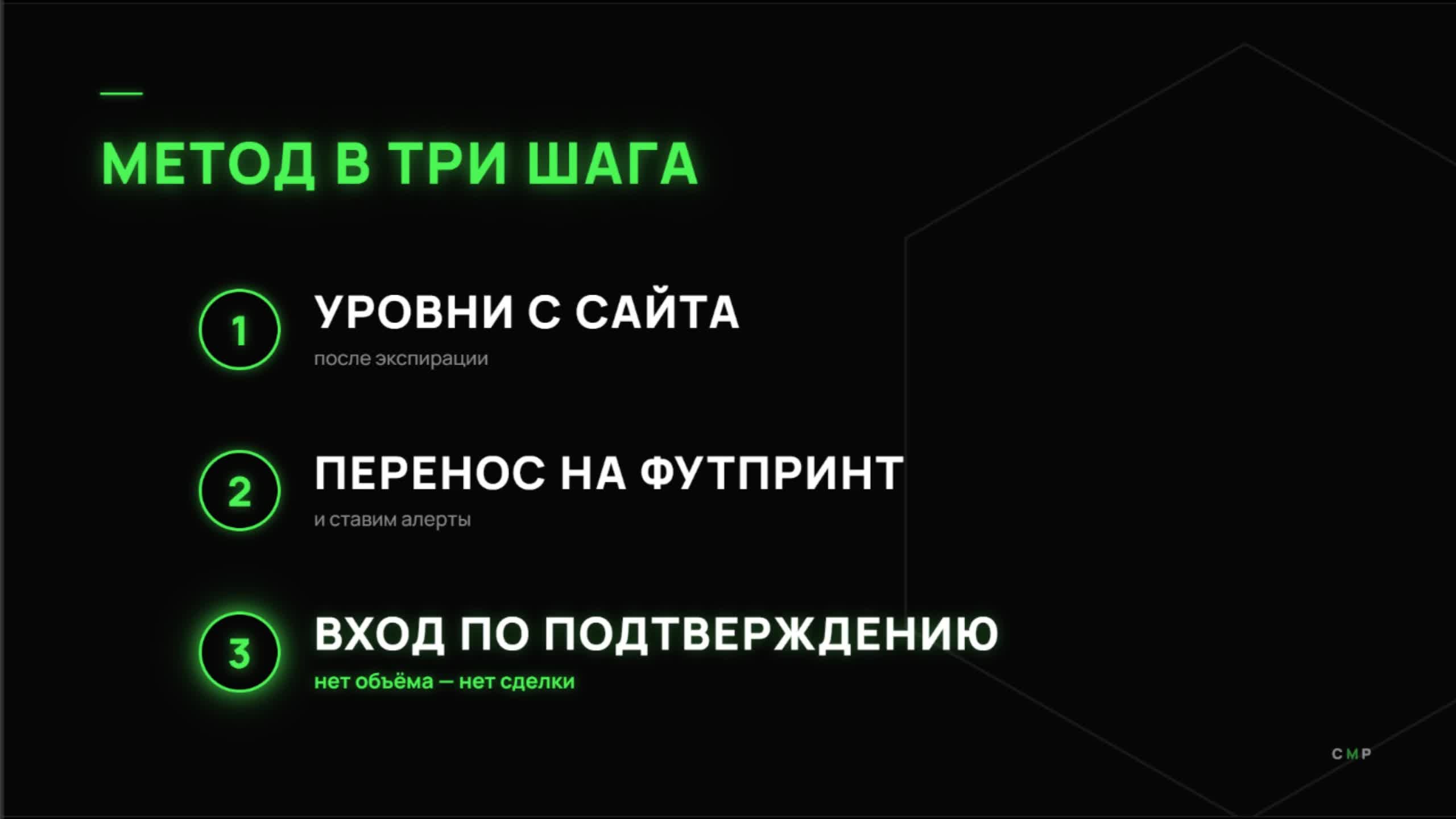
The three-step method: levels from the site → transfer to the footprint with alerts → enter on volume confirmation.
Step 1: take levels from the GEX Terminal
First find strong option levels. In the GEX Terminal you can see the walls: P1/P2 — resistance above, N1/N2 — support below, plus Max Pain and the Flip Point. The largest walls are the most reliable levels; those are the ones to hide the stop behind. In the screenshot, for example, support N1 $62,500 and walls P1 $63,000 / P2 $63,500.
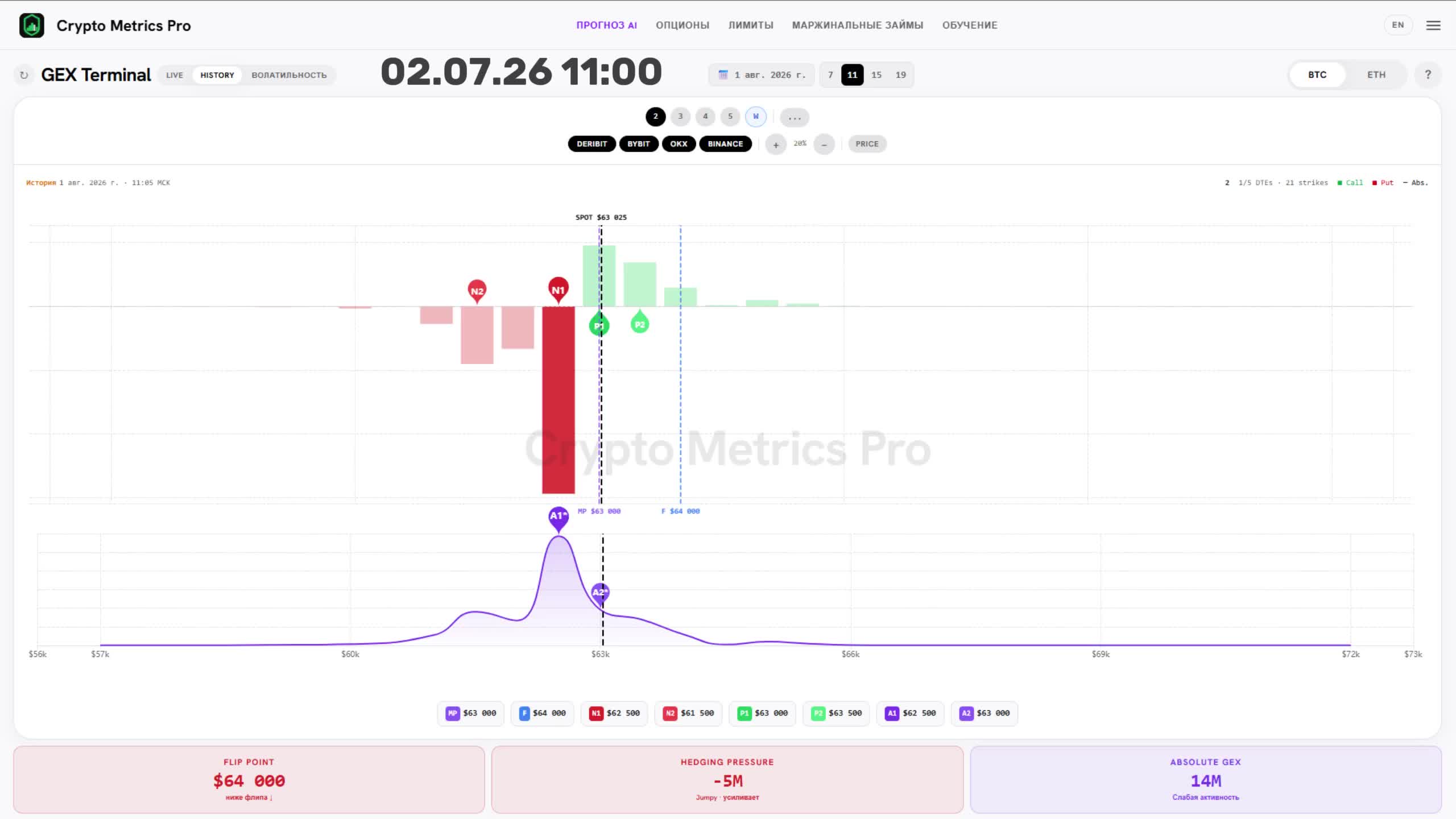
GEX Terminal: walls P1/P2 (resistance), N1/N2 (support), Max Pain and Flip Point — the source of strong levels.
Steps 2–3: footprint and entry on confirmation
Transfer the levels onto the footprint chart and wait. When price approaches a level, watch the volume: if you see absorption and a reaction at the level (large volume turning price), that is confirmation — you can enter. Place the stop behind the level, with a margin. In the screenshot price approached the support zone, showed volume and reversed up — that is an entry on confirmation, with the stop hidden below the level.
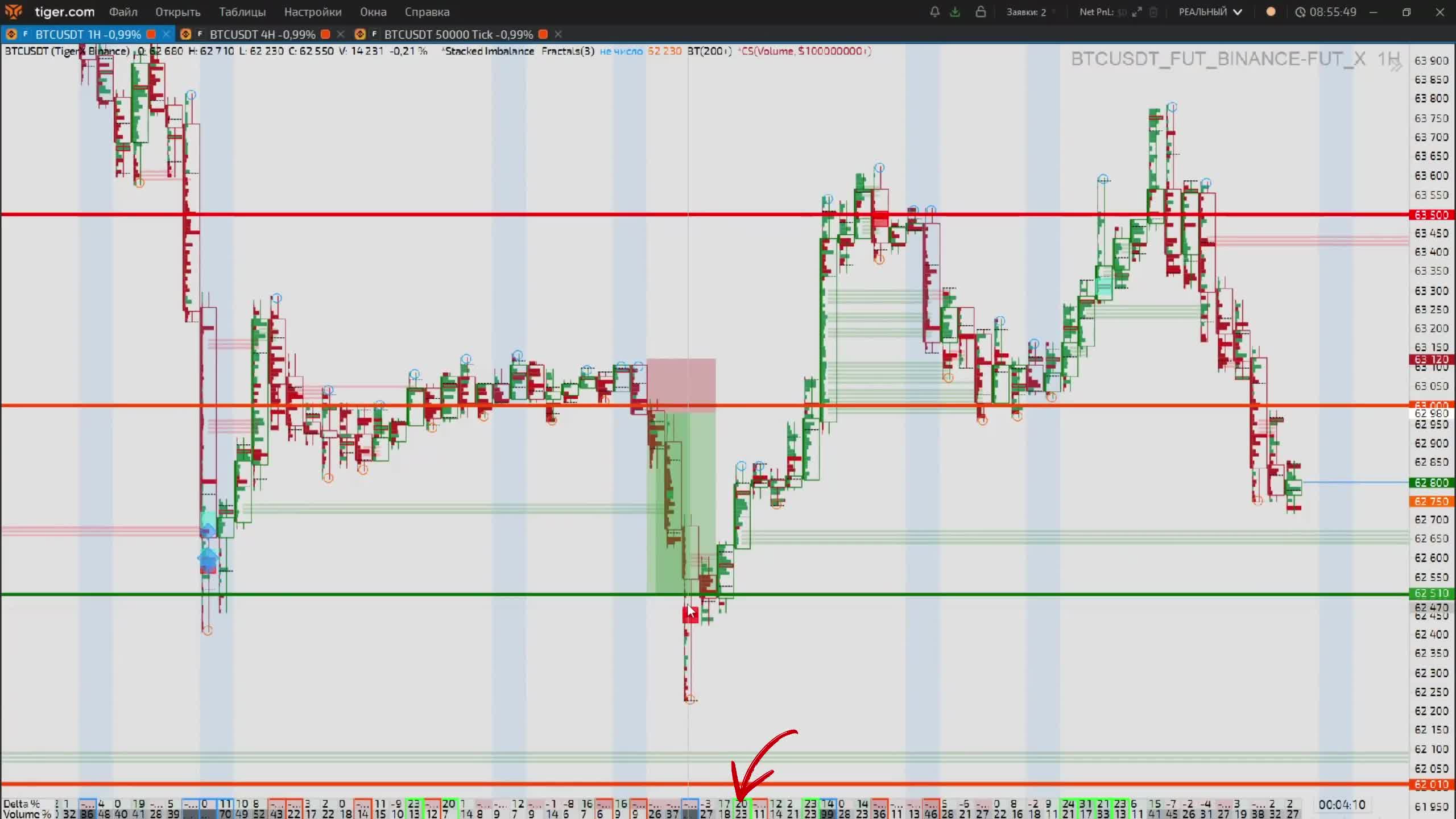
Levels transferred to the footprint: entry at support on volume confirmation, stop behind the level. No volume — no trade.
What a beginner should watch
To enter without random stop-outs, a beginner only needs a few references:
- Walls (P1/P2, N1/N2). Large support and resistance levels — look for entries only at these.
- Wall size. The larger it is, the more reliable the level and the safer the stop behind it.
- Volume at the level. Enter only on confirmation: no volume — no trade.
- Expiry date. After it, refresh the levels so you do not trade on an old map.
No-stop-out entry checklist
- I took strong levels from the GEX Terminal (refreshed after expiry).
- I transferred the levels onto the footprint and set alerts.
- I waited for price to approach the level — I do not enter mid-move.
- I entered only on volume confirmation (no volume — no trade).
- I hid the stop behind a strong level (behind the wall), not in a random place.
In short
Getting stopped out usually comes from a random entry. The method is simple: take strong option levels from the GEX Terminal (and refresh them after expiry), transfer them onto the footprint with alerts, and enter only on volume confirmation — no volume, no trade. Hide the stop behind a wall the large player defends — then, to stop you out, the market first has to break it. Current Bitcoin levels are in the GEX Terminal on CryptoMetrics Pro.
See BTC and ETH levels live in the Options · GEX module.
Open moduleMore guides
This material is educational and is not individual investment advice. Trading cryptocurrencies and derivatives carries a high level of risk.