Collar (Protective Hedge)
You hold the coin and want to insure it against a crash almost for free. You buy a protective put and pay for it by selling a "ceiling" above: you're protected on the downside and earn up to that ceiling on the upside.
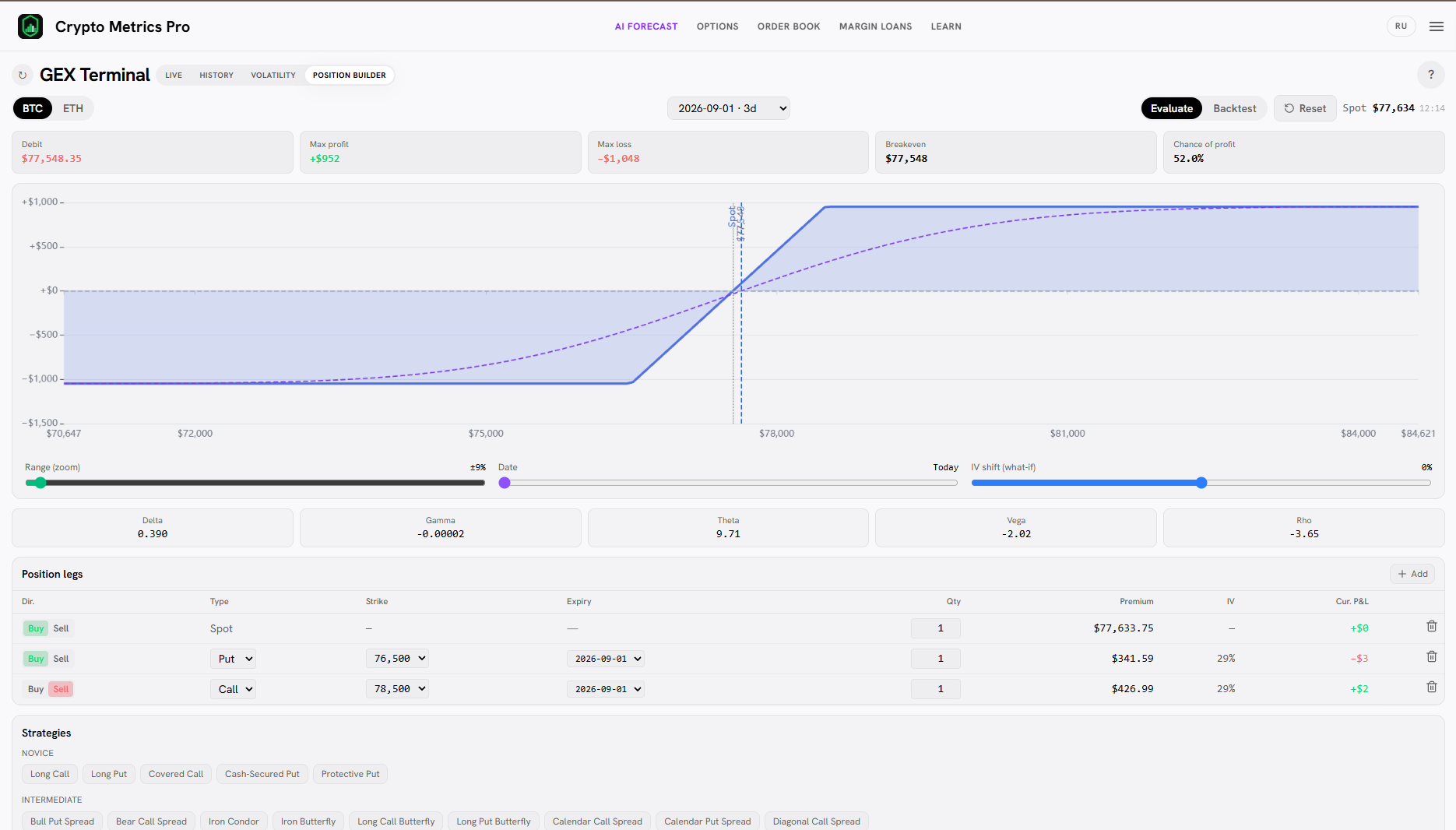
How the Collar works
The put sets a floor, and the sold call funds it (sometimes a "zero-cost" collar — no net cost), but caps the upside. A classic way to protect accrued profit without selling the asset.
Placing strikes at GEX levels
Set the put at the Put Wall (a support floor) and the call at the Call Wall (a resistance ceiling): the bounds match the real market structure. It suits an event or uncertainty.
The walls are computed live in the GEX Terminal — Position Builder.
When to open, the Greeks and managing the position
Build it in periods of heightened uncertainty or before major events, to insure accrued paper profit without selling the asset (and without triggering capital-gains tax). It is often structured near "zero-cost". Breakeven = asset price + put premium − call premium.
Greeks: the long put + short call combination makes the position fairly insensitive to vega/theta. Management: profit is capped at the call strike, loss at the put strike; as price rises toward the call the asset may be called away, so roll the call up.
FAQ
When the sold call's premium fully covers the bought put — the hedge is nearly free, but upside is capped at the call strike.
To protect profit/position from a drawdown without selling the asset, accepting a capped upside.
Build the Collar on live BTC and ETH quotes in the Position Builder.
Open the Position BuilderRelated strategies
Information is for educational purposes only and does not constitute investment advice. Options trading carries high risk.